That Was Not Your Grandchild on the Phone
AI voice scams are targeting Canadian seniors — here’s what you need to know
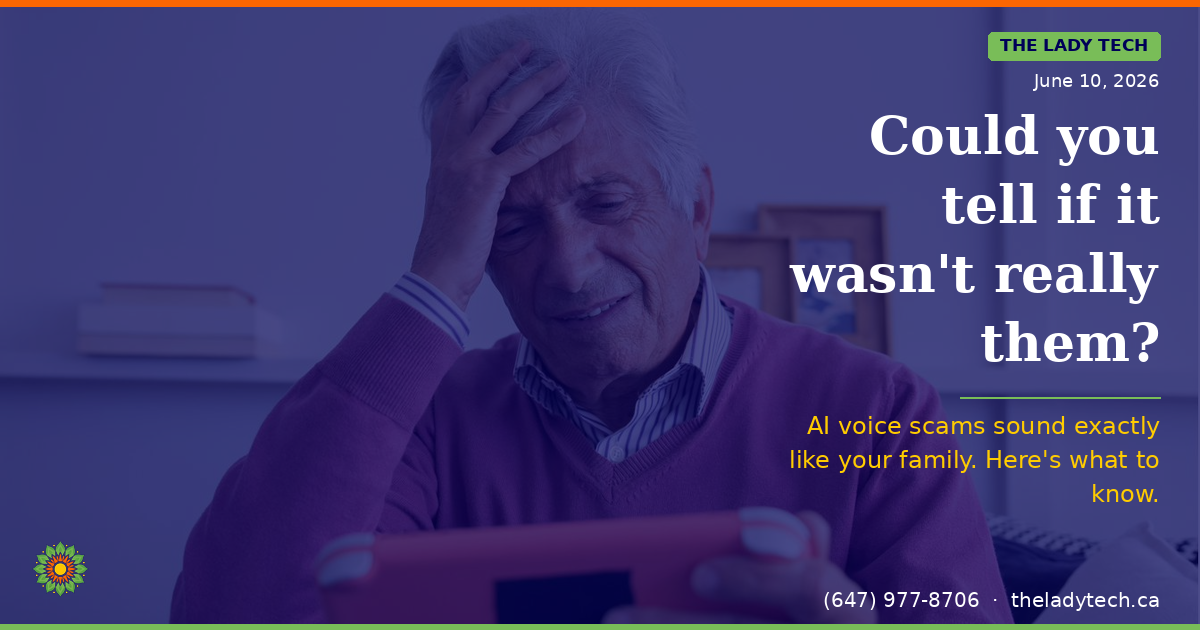
It usually starts with a phone call — or a text.
The voice on the other end sounds exactly like your grandson. Or your daughter. Or your nephew. They’re upset — crying, even — and they need your help. Right now. Please don’t tell anyone else in the family.
They’ve been in a car accident. Or arrested. Or they’re stuck somewhere without money. Whatever the story, the ask is always the same: send money immediately, and keep it secret.
Here’s what you need to know: that may not have been your grandchild at all.
How AI Can Copy Someone’s Voice in Seconds
Artificial intelligence tools can now clone a person’s voice from just a few seconds of audio — the kind of audio that’s freely available in a birthday video on Facebook, a TikTok your grandkid posted, or a voicemail they left you two years ago.
Once a scammer has that clip, they can make the AI say anything. And it sounds real. It sounds warm and familiar and frightened. Because it’s built from an actual voice you love.
This technology has become widely available and inexpensive, and fraud reports involving AI voice cloning have been rising sharply across Canada. According to the Canadian Anti-Fraud Centre, Canadians reported $3.2 million in losses to grandparent scams in 2024 — and the CAFC estimates only 5 to 10 per cent of fraud is ever reported. In 2024, seniors accounted for nearly 40 per cent of all reported fraud losses in Canada.
The Script They Use
While every call is a little different, the pattern is almost always the same:
⚠ Watch for this pattern
The opening hook: “Grandma? It’s me.” They wait for you to say the name — and then confirm it.
The urgent problem: A car accident, an arrest, a medical emergency, being stranded abroad.
The secrecy request: “Please don’t tell Mom and Dad — I don’t want them to worry.”
The money ask: Wire transfer, gift cards (iTunes, Google Play, Amazon), e-transfer to an unfamiliar account, or a Bitcoin ATM.
The second caller: Often a fake “lawyer,” “police officer,” or “bail bondsman” will get on the line to add official-sounding pressure.
The entire goal is to get you emotional and moving quickly — before you have time to think or verify.
Why It Works — And Why That Is Not Your Fault
This scam is designed by professionals whose full-time job is to exploit human instinct. When we hear someone we love in distress, every natural impulse tells us to help immediately. The secrecy element is deliberate — it’s meant to cut you off from anyone who might slow you down and think it through with you.
If you’ve received one of these calls and felt your heart race, that’s a completely normal reaction. It’s also exactly what the scammers are counting on.
What To Do If You Get This Call
Slow down before sending money or sharing any information
Take a breath. A genuine emergency doesn’t require you to send gift cards or a wire transfer in the next five minutes. If someone is truly in trouble, the situation will still be true after you’ve made one quick phone call to verify.
Hang up and call your family member directly
Use the number you already have saved in your phone — not a number the caller gives you. If your grandchild is actually fine, you’ll know within 60 seconds.
Don’t send money until you’ve spoken to someone you trust
Gift cards and cryptocurrency are a scammer’s favourite payment methods because they are almost impossible to trace or recover. No legitimate lawyer, police officer, or bail service will ever ask to be paid in Apple Gift Cards or any other gift card — and none will ever ask you to deposit cash into a Bitcoin ATM.
Set up a family code word
Agree on a secret word with close family members — something only they would know. If someone calls claiming to be family in trouble, ask for the code word. A real family member will know it. A scammer won’t.
If You’ve Already Sent Money
Please don’t be embarrassed. These scams succeed on very smart, capable people regularly. The scammers are sophisticated and the technology is genuinely convincing.
Here’s what to do:
- If you sent a wire transfer or e-transfer, call your bank immediately and explain what happened. They may be able to stop or recall the transfer.
- If you bought gift cards, keep the cards and the receipts. Report to the retailer (Apple, Google, Amazon) — while recovery is rare, it’s worth trying.
- If you deposited cash into a Bitcoin ATM, contact your local police immediately. According to the Canadian Anti-Fraud Centre, Canadians lost $14.2 million to cryptocurrency ATM scams in 2024 alone. Once cash is converted and sent, it is almost impossible to recover — but reporting it helps protect others.
- Report it to the Canadian Anti-Fraud Centre: call 1-888-495-8501 or report online at antifraudcentre-centreantifraude.ca. Your report helps protect other Canadians.
- Contact local police if significant money was lost.
- Have a trusted person check your device — if you gave the caller any access to your computer or phone, have it checked for remote access tools that may have been installed.
How to Help Protect an Older Parent or Relative
If you’re an adult child reading this on behalf of a parent, here are a few practical steps:
✓ Do these now — before a call ever comes
Have the conversation now. Let them know this technology exists and that you’ll never ask them to keep an emergency secret.
Set up a family code word together. Write it down somewhere safe at home.
Check their Facebook privacy settings. Public profiles and videos are a treasure trove for scammers looking for voice clips.
Make it easy to call you. If your name and number are easy to find in their phone, it takes less than a minute to verify.
⚠ Disclaimer
This article is for general information and awareness only and does not constitute legal, financial, or cybersecurity advice. Scam tactics evolve constantly — information here was current as of June 10, 2026 but may not reflect the latest methods. The Lady Tech assumes no liability for losses resulting from fraud or cybercrime. Always contact your bank, local police, or the Canadian Anti-Fraud Centre (1-888-495-8501) if you believe you have been targeted.
In-home visits · Computers, phones & tablets · Software only — hardware repairs referred out · Service agreement signed before we begin · I am not a certified technician; I provide support based on experience and knowledge · Canadian Anti-Fraud Centre 1-888-495-8501